 English
 Mandarin
 French
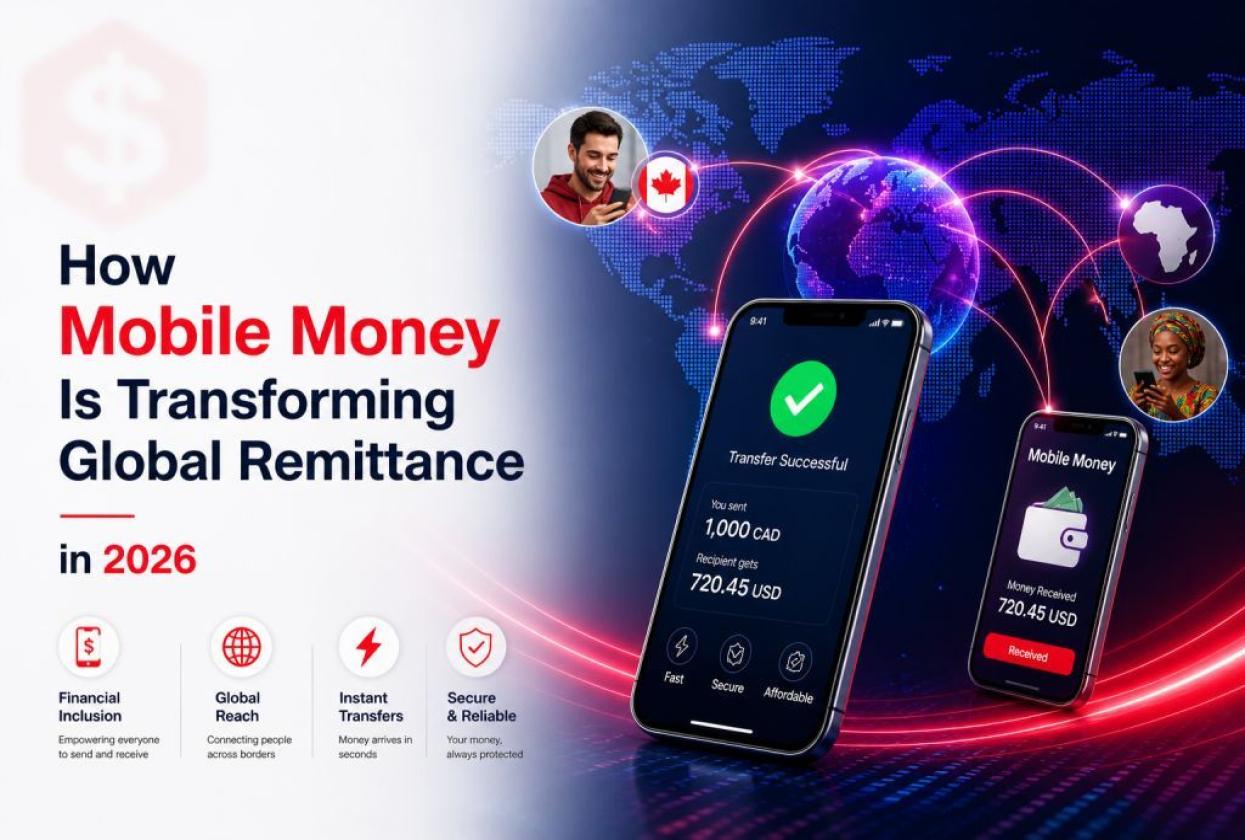
Mobile money is rapidly reshaping how people send money internationally, especially across Africa, Asia, and emerging markets. In 2026, mobile wallet transfers and digital remittance platforms are no longer alternatives—they are becoming the preferred way to move money globally.
With faster transactions, lower costs, and greater accessibility, mobile money is transforming the future of international money transfers.
What Is Mobile Money?
Mobile money is a digital financial service that allows users to send money, receive funds, and store value using a mobile phone—without needing a traditional bank account.
Unlike traditional banking, mobile money enables:
Instant peer-to-peer transfers
Payments via mobile wallets
Access to financial services without a bank
This has made it a key driver of financial inclusion worldwide.
The Rise of Mobile Money in 2026
Mobile money adoption has grown at an unprecedented rate.
Over $2 trillion in mobile money transactions were processed globally in 2025
Sub-Saharan Africa alone accounts for a majority of global mobile money activity
Millions of users now rely on mobile wallets for everyday transactions
This growth shows that mobile money is no longer niche—it’s a core part of the global remittance ecosystem.
1. Lower Costs for International Transfers
One of the biggest advantages of mobile money is reducing the cost of cross-border payments.
Traditional bank transfers often involve multiple intermediaries, which increases fees. Mobile money reduces these layers, helping lower the cost of sending money abroad.
Research shows that mobile money systems can significantly reduce remittance fees in Sub-Saharan Africa by simplifying the transaction process .
This makes mobile money one of the most affordable ways to send money internationally.
2. Faster and Near-Instant Transfers
Speed is critical in global remittances, especially for families relying on funds.
Mobile money enables:
Instant or near-instant transfers
Real-time transaction confirmations
Faster delivery compared to traditional banking systems
Instead of waiting days for an international bank transfer, users can send money in minutes using mobile wallets.
3. Financial Inclusion for the Unbanked
One of the most transformative impacts of mobile money is financial inclusion.
In many regions, millions of people do not have access to traditional banking services. Mobile money changes that by allowing users to:
Open accounts with just a mobile phone
Receive international remittances بسهولة
Participate in the digital economy
In Sub-Saharan Africa, a significant portion of adults now use mobile money as their primary financial tool .
This has expanded access to global money transfer services like never before.
4. Seamless Integration with Remittance Platforms
Modern online remittance services now integrate directly with mobile wallets, making transfers even easier.
Users can:
Send money directly to mobile wallets
Transfer funds between bank accounts and wallets
Use hybrid systems combining banks and mobile money
Platforms like KinMoney support transfers to both bank accounts and mobile wallets, making them ideal for global users.
5. Expanding Cross-Border Payment Networks
Mobile money is evolving beyond local transfers into a global system.
New developments include:
Interoperability between mobile wallets across countries
Regional payment systems supporting local currencies
Integration with banks and fintech platforms
In Africa alone, mobile money processed over $1.4 trillion in transactions, highlighting its dominance in the region .
This expansion is making international remittances faster and more connected.
6. Supporting Small Businesses and Trade
Mobile money is not just for personal transfers—it is also transforming business payments.
Small businesses can now:
Receive cross-border payments instantly
Pay suppliers in different countries
Operate without traditional banking barriers
As mobile money evolves, it is playing a key role in enabling cross-border trade and digital commerce.
7. Improved Security and Transparency
Modern mobile money platforms use advanced security features such as:
Encryption and secure authentication
Transaction tracking and alerts
Fraud detection systems
These features make mobile money a secure way to send money online internationally, especially when combined with trusted providers.
Challenges to Overcome
Despite its growth, mobile money still faces challenges:
Limited interoperability between some countries
Regulatory differences across regions
Security risks if systems are not properly managed
In some cases, cross-border mobile money transfers within Africa can still be expensive due to fragmentation .
However, ongoing innovation is addressing these issues.
The Future of Mobile Money in Global Remittance
Looking ahead, mobile money will continue to shape the future of international money transfers.
Key trends include:
Integration with central bank digital currencies (CBDCs)
Expansion of real-time global payment systems
Increased competition driving lower fees
Deeper financial services (loans, savings, investments)
Mobile money is moving from simple transfers to a full digital financial ecosystem.
Final Thoughts
Mobile money is transforming how people send money abroad in 2026. By reducing costs, increasing speed, and expanding access, it is making global remittance services more efficient and inclusive.
For individuals and businesses alike, using platforms like KinMoney—which combine mobile wallet transfers with secure international payments—offers the best of both worlds: convenience and reliability.
As technology continues to evolve, mobile money will remain at the center of the global digital remittance revolution.
Kin Money
Ready to send money globally?
Start a secure international transfer with confidence.